Zara 2020 UI/UX Design Research ⏐ Personas ⏐ Business Model ⏐ Journey Mapping ⏐ UI Design ⏐ Usability Testing ⏐ Prototyping ⏐ Visual Design
Overview
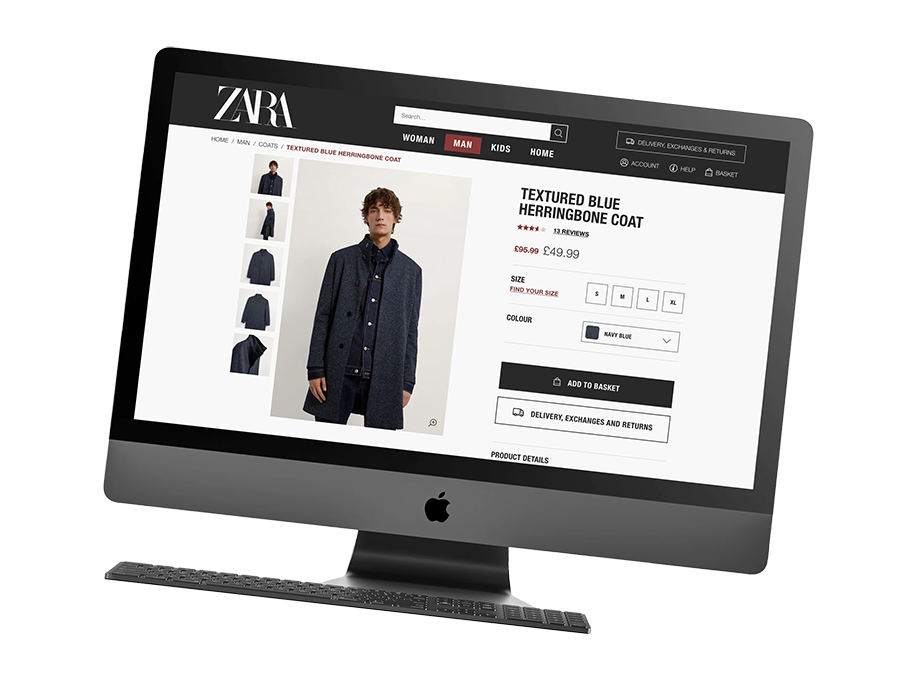
When the pandemic reshaped how people shop, Zara faced a challenge shared by much of the retail world: translating the in-store experience into an intuitive, enjoyable digital one. As one of the largest global fashion retailers, Zara defines its identity through beauty, clarity, functionality, and sustainability. Yet its website struggled to balance those values.
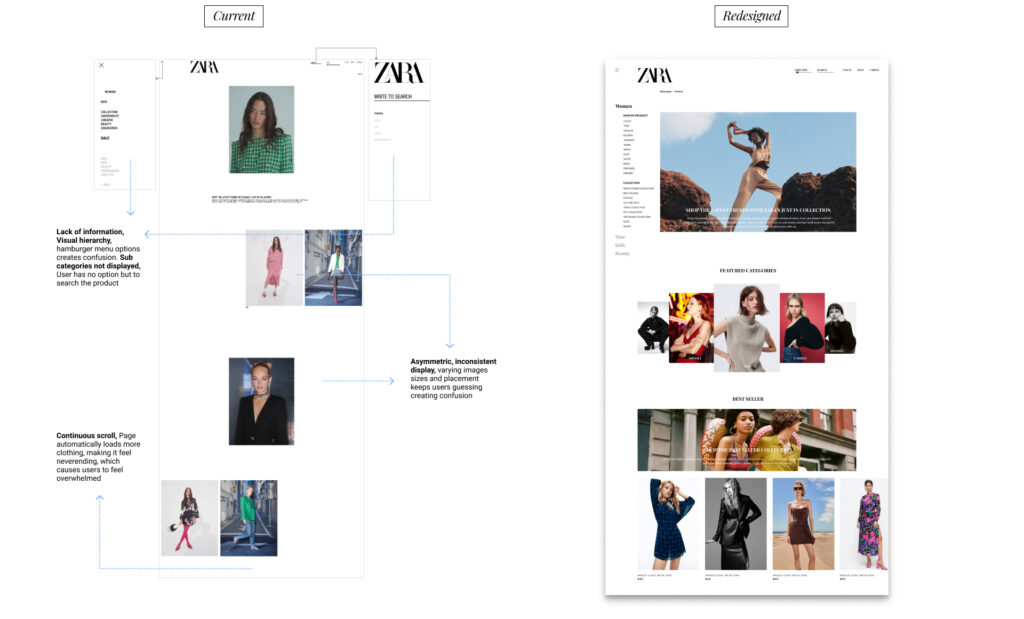
While visually stunning, the interface often sacrificed clarity for aesthetics. Users found it confusing to navigate, difficult to browse, and almost impossible to backtrack during their shopping experience. Our goal was to reimagine Zara’s digital platform into something that felt seamless, functional, and as confident as the brand itself.
The challenge
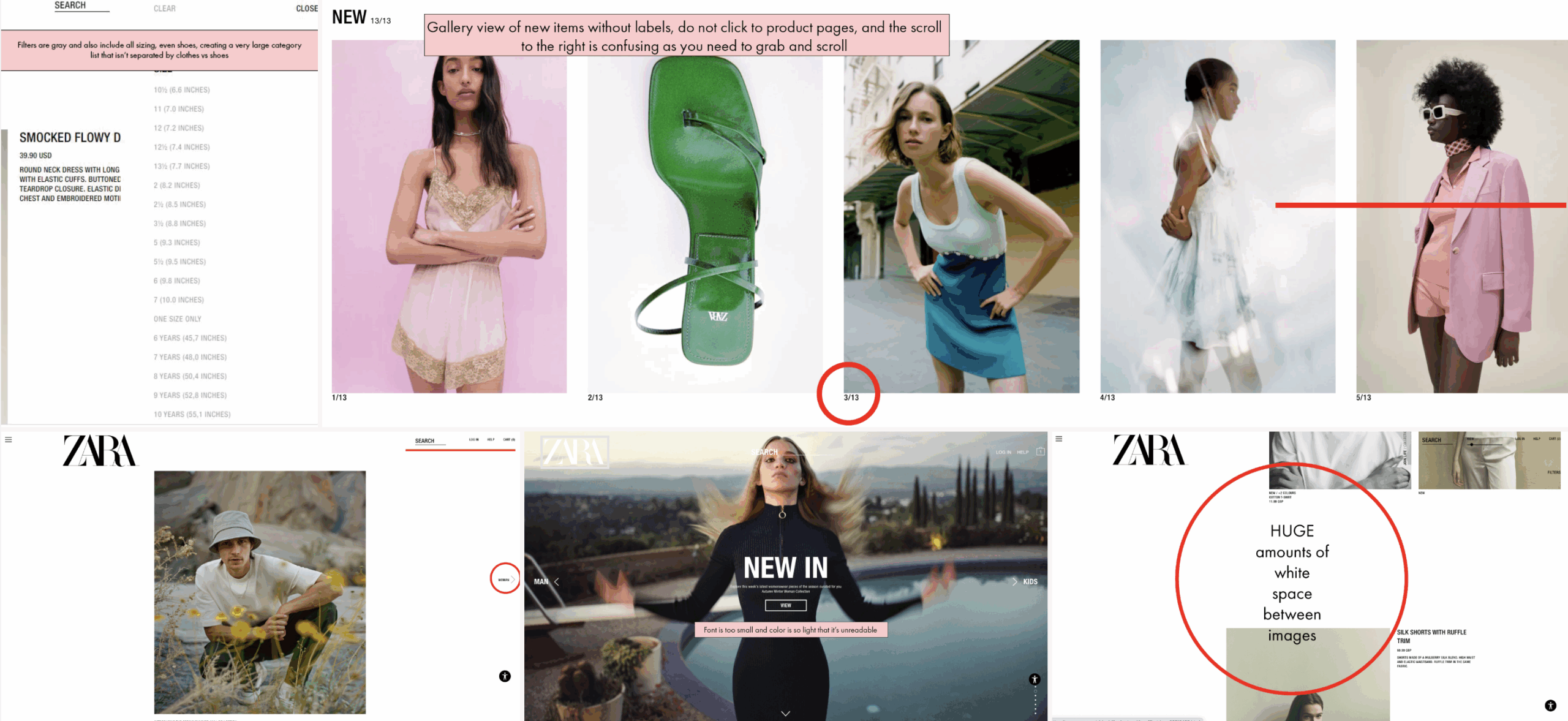
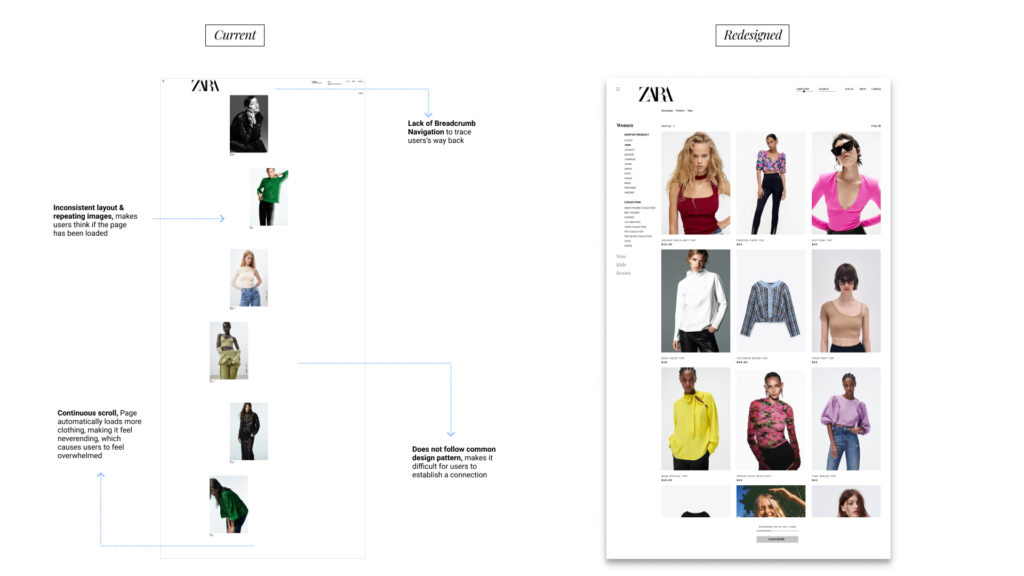
Customers struggled to navigate Zara’s website and complete purchases efficiently. Many described the experience as “confusing” and “unintuitive,” citing awkward navigation, inconsistent layouts, and a lack of visual hierarchy. Even dedicated fans found it frustrating to find basic product categories or retrace their steps after viewing an item.
This project focused on understanding how users interacted with the site, identifying usability issues, and discovering opportunities to create a more efficient and satisfying experience.
Research
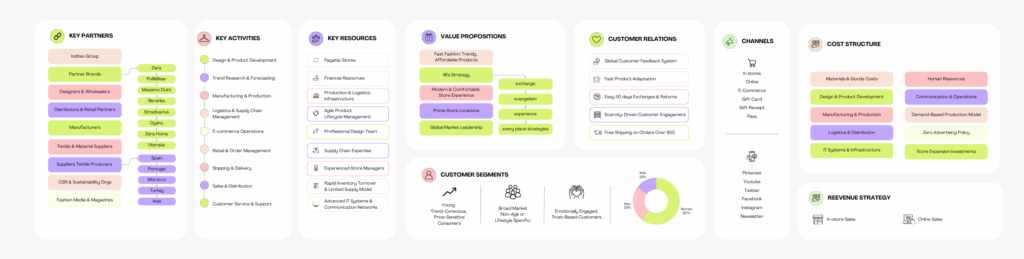
To ground our understanding of the brand, we began by mapping out Zara’s business model canvas. We analyzed the company’s key resources, activities, value propositions, customer relationships, and revenue streams. This framework helped us see where user experience and business objectives could align more seamlessly.
We conducted live user interviews to explore how customers felt while navigating Zara’s website. Each participant was asked to browse for a winter sweater while thinking aloud, describing their process and frustrations in real time.
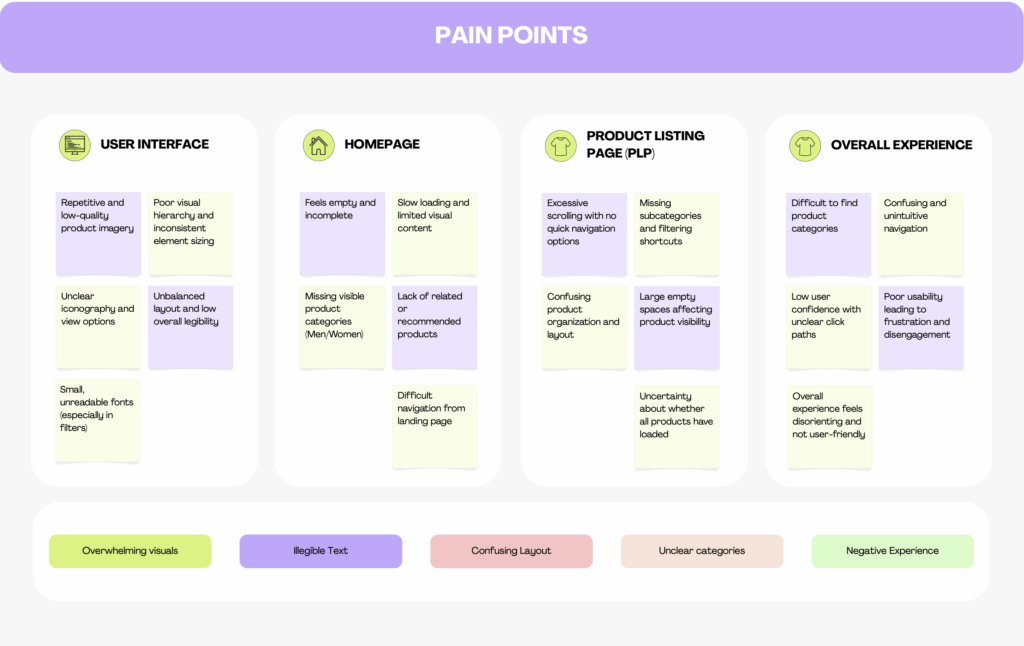
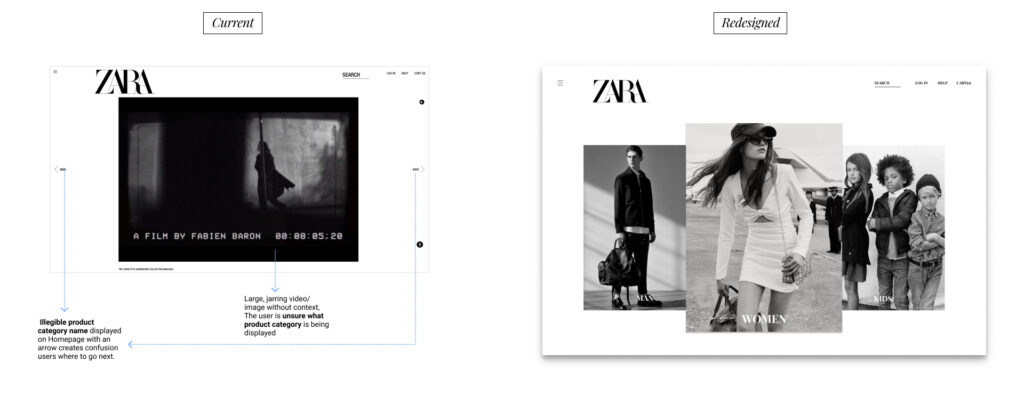
The results were eye-opening. Users frequently lost their sense of direction and struggled to understand how to reach desired categories. Several expressed confusion over the homepage’s minimal layout and unclear navigation cues.
Usability Testing
Alongside interviews, we performed usability tests on the existing website. Participants followed the same scenario and their interactions were recorded for analysis. The tests confirmed a consistent pattern of user confusion and revealed multiple pain points in Zara’s current flow.
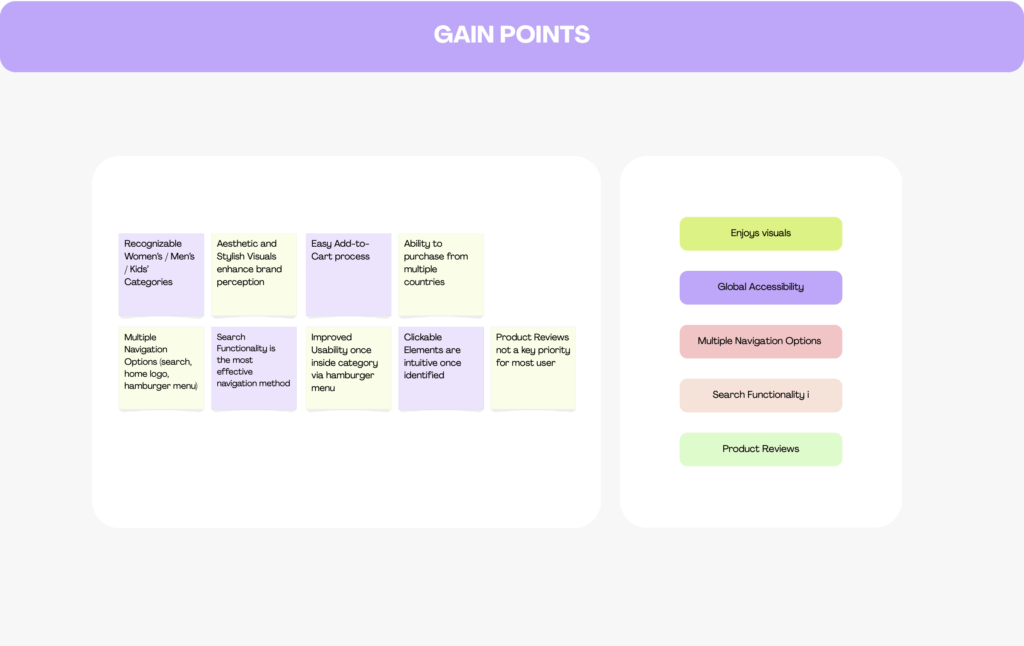
We reviewed session recordings, transcripts, and notes, then translated every user comment and observation into visual data points. By grouping these into themes with an affinity diagram, we identified major usability challenges: unclear navigation, lack of filters, inconsistent product display, and missing feedback loops.
personas
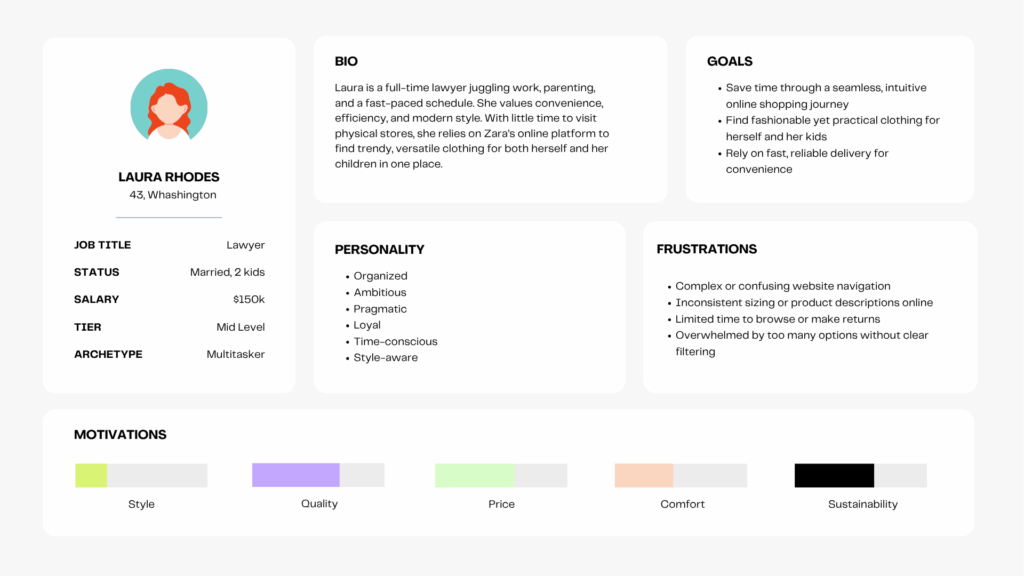
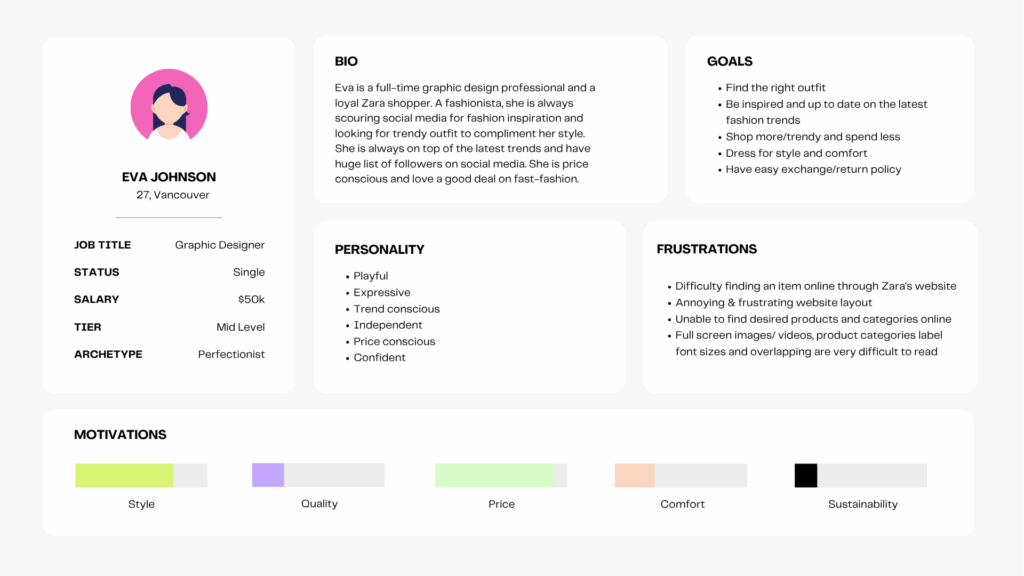
Using insights from interviews and tests, we built a detailed persona that represented Zara’s target customer—a trend-conscious, tech-savvy individual between 18 and 35 who values design but expects a smooth digital experience. This persona helped guide every decision toward empathy-driven design.
We visualized the customer experience in a journey map, which clearly showed emotional highs and lows throughout the browsing process. The biggest drop in satisfaction occurred during product discovery, where users often became frustrated and disengaged.
Recommendations
Our findings led to several actionable design opportunities:
Simplify navigation. Replace hidden arrows and minimal text with a clear, top-level menu visible on every page. Add breadcrumb trails. Allow users to backtrack easily without relying on the browser’s back button.
Unify the grid. Create a consistent visual rhythm so product browsing feels organized and comfortable. Improve filtering. Display subcategories and filters upfront to reduce search fatigue and speed up decision-making.
User Flow and Wireframes
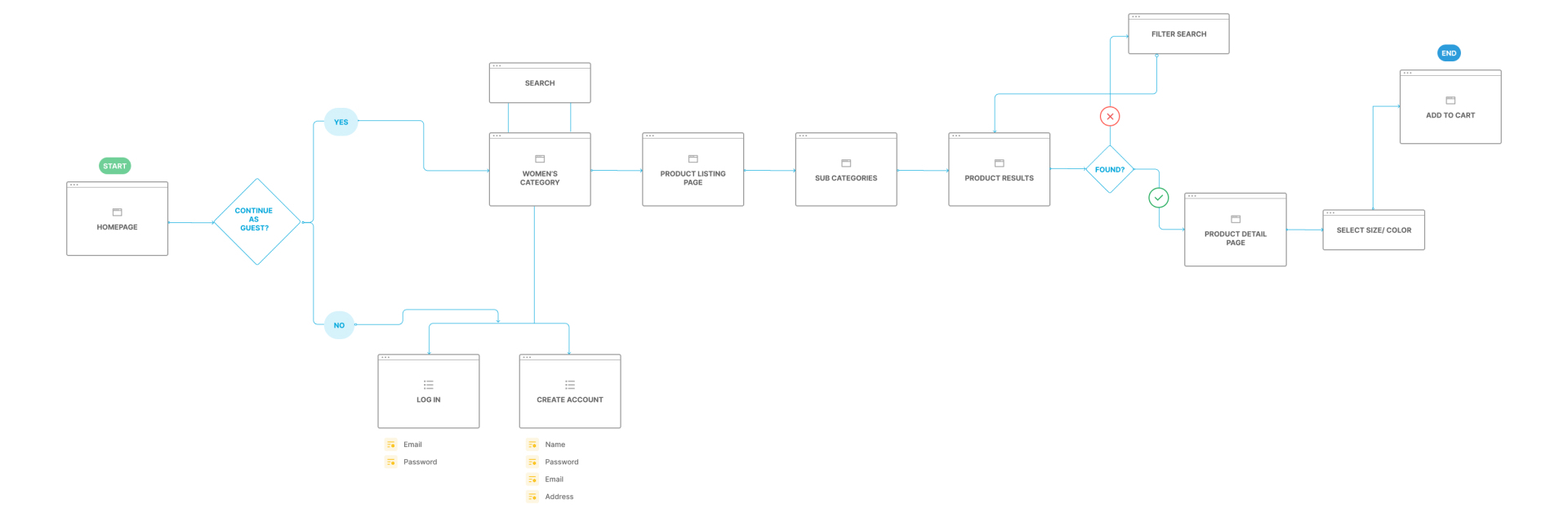
With Zara’s current site in mind, we structured an improved user flow that reflected natural shopping behavior. Each path was based on real user stories—like searching for a seasonal item or browsing a new collection—ensuring that every interaction felt logical and intuitive.
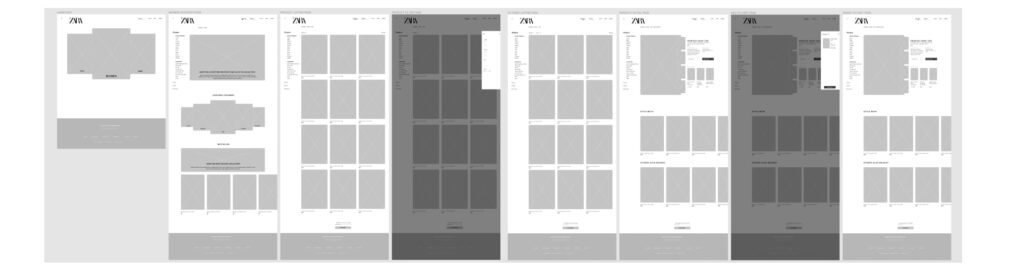
Once the structure was clear, we developed low- and mid-fidelity wireframes in Figma. These layouts focused on hierarchy, clarity, and balance. Each frame was designed to make browsing feel calm and deliberate, while preserving Zara’s refined aesthetic.
User Testing
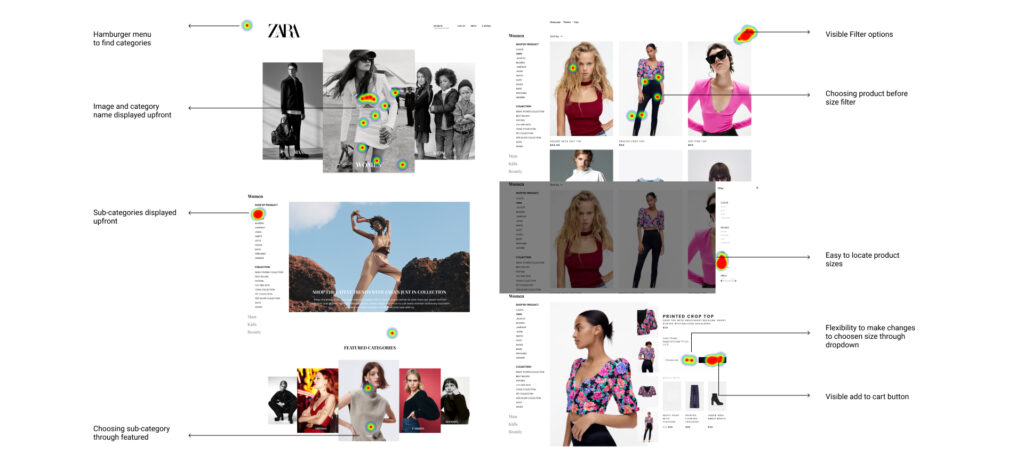
We tested the redesigned prototype through Useberry, collecting data from real user sessions. The tests provided heatmaps and click analytics that revealed how users interacted with the new structure, helping us fine-tune navigation and content placement.
Analyzing the heatmaps gave us clear visual evidence of user behavior—how far users scrolled, where they hesitated, and which elements drew their attention. This helped us refine calls to action, grid layouts, and visual rhythm to further enhance usability.
Design Solutions
After several iterations and test rounds, we incorporated user feedback into the final design solutions. The redesigned site balanced fashion-driven visuals with intuitive functionality, giving users both aesthetic pleasure and control.
Our high-fidelity prototype represented the culmination of all insights and refinements. The design preserved Zara’s minimal elegance while finally making the browsing and purchasing process feel effortless and reward